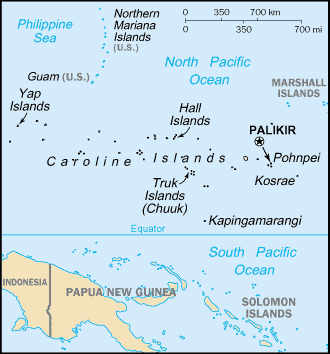
[This email letter was relayed out from Yap, Micronesia, in the wake of Typhoon Sudal, with the author's permission to reproduce it freely. I've done so verbatim, omitting only one paragraph. My own experience of a hurricane on Yap in 1974 is utterly inconsequential by comparison.]
Dear Friends,
Seok Ha and myself are both shaken, but whole and healthy (minus a nasty head cold that doesn't want to give up) doing much better than OK given the circumstances, but it is with immense sadness I convey these tidings from our tiny little tropical islands to y'all.
Typhoon Sudal may have broken Yap's back, but not its people's spirits.
Nobody ever expected the eye of a super typhoon to hit Yap head on. This was not supposed to happen, traditionally, the Yap sorcerers and magicians have had the powers to divert typhoons. And following the old "badness comes in waves" adage (no pun intended), the peak of typhoon intensity naturally happened to coincide with high tide. Add to that an extreme ocean water surge pushed by Sudal, and these here islands found themselves, as the saying goes, in deeper than usual waters.
We were told, and some of us could learn on the Internet typhoon warning pages, that the "outskirts of Sudal" was, maybe, going to affect Yap. Nobody was mentally, or physically, prepared for the assault that hit us shortly after midnight. Typhoon Mitag, that two years ago I thought was mighty scary, was nothing in comparison. Sudal was not classified as a super typhoon (and I don't know if it was ever officially "upgraded"), but the opinion of everyone here--even people with first hand experience of serious US hurricane damage--is clear: this was, by far, the worst anyone has ever even heard of. Some of the old Yapese people I talked with remembers a strong typhoon that hit in the late forties, but with nowhere near the destructive energy that Sudal packed. But the spirit of the Yapese turns out to be incredibly strong, and resilient. Come to think of it, that may be a mental requirement, in order to live permanently out here.
I know of no actual measurements taken during this intense ordeal, but Sudal was announced as being of typhoon strength, with 120 knots (60+ meter per second) sustained winds, and up to 180 knots (90+ meter per second) gusts. There may be a tendency to overestimate these things when you're in the middle of it all, but judging from the extreme damage that was delivered to Yap on these Easter holidays, and by how it was absolutely impossible to venture outside during the peak hours (the "eye" stayed over Yap, incessantly delivering one blow after the other, for a good six hours), my guess is that by the time Sudal hit Yap proper full force (about 02:00), it had grown well into super typhoon territory. As if the matter of classification really matters.
Power and water went early, leaving all the islands in virtual darkness, and with no drinking water. Thanks to no less than heroic efforts by Tim and Tim (water and power, respectively) and their crews, we got power back already early this morning, and we're promised to have our water back by tomorrow. That is only here in Colonia, though (priority one due to the needs of the Yap State Hospital), the complete grid will probably take some time to get back online.
My personal assessment is that 60 percent of all local businesses, 70 percent of all homes, and 80 percent of all schools, are utterly devastated, completely written off. Gone. Can't even use the rubble left behind as building material, as the pieces are too small. As kindling, yes. Rumung island is reported to be especially hard hit, with zero man-made structures remaining.
The COM [College of Micronesia] campus, as its neighboring Yap High School campus, looks as if a bomb exploded above the area (especially with that old Japanese concrete tower, with all its US battleship and artillery shelling scars from WWII, residing in the middle of it all). Only the admin and the computer lab buildings are still standing. But my guess is that it will be a considerable while before any Yapese students will have any interest in taking night-time computer courses. Rumor has it that the school board has decided to terminate the 2004 school year early.
The airport terminal buildings has sustained some cosmetic damage, but it looks as if there are no structural problems, except for the fire truck shelter (gone) and the PMA hanger (the hanger doors are bulging outwards, from excessive pressure from within). And unfortunately, all the trees and koyengs [shelters] lining the AP parking lot, together with the "Welcome to Yap" sign, succumbed to the awesome powers of Sudal. It looks like a war zone, the aftermath of another bomb attack.
The Save Way store, along with most of Madrich, and all shoreline Baleabaat houses, gone. Videographer Mark Thorpe, who now rents a concrete house across the road from where Save Way used to be, is fine, but his house got a thorough enema administered by seven meter (20+ feet) waves that kept pummeling the shoreline. He considers himself lucky to have lost only a few belongings, while his next door neighbors were being completely wiped out, and with zero means to rebuild. The outer island Madrich residents, already in abysmal conditions in their shantytown, were emergency evacuated to a few schools, and as if to kick them while they were already downed flat, Sudal then proceeded to blow away the roofs of the schoolhouses. When it rains, it pours, indeed.
Seven-to-ten meter waves pounded the Chamorro Bay Bridge for hours (miraculously, it is still standing, with its concrete pillars all knocked to one side or another, and the steel guardrails severely twisted!), and the ocean surges continued past the bridge to seriously damage all houses and businesses lining the Chamorro Bay.
Ace's Mart, demolished, as was the little yellow church up on the hill, and the kindergarten (pre-school?). Professor Caldwell's house (where Carl used to rent) next door was left untouched, as was the Baha'i house--it seems to me as if that particular area received some protection from the Nimar hill.
Pathway's Hotel got lucky, with only thatch damage (on first assessment, anyway), but in need of lots and lots of minor repair work on all eight units, this with their economy already severely strained by recent events.
Many boats were thrown way up on dry land, most smashed useless.
And trees down, everywhere. In many places in massive piles.
Most Yap coconut trees are now asymmetrical, with all fronds facing the head-on direction of Sudal being brutally ripped off. On Guam, not even super typhoon Paka was able to break healthy coconut trunks: here on Yap, there are now many many coconut trees snapped off like so many matches, silent evidence of how much communal power these tiny air molecules are capable of carrying. Many of the steel reinforced concrete power poles are leaning, but only very few got snapped. Incredibly strong wind gusts!
The Angel's Mart (Chinese store) and the bakery next to the ESA hotel got flushed clean from the bay-side, with *all* merchandise and product spread all over the road and neighboring landscape. I do not know the status of ESA hotel itself, but I hope it is in as good shape as it looks (minus its bayside koyengs [shelters], of course).
Trader's Ridge Resort looks comparatively good, but I have no details, as I have not yet ventured past the accumulated debris up the Nimar hills.
The courthouse corner was ripped wide open, and law texts from their library are now littering most of downtown Colonia.
The YCA hardware store/warehouse was demolished beyond repair, battered by both waves and high winds. In contrast, the new WAAB Hardware building, obviously well built, stands relatively undamaged.
The Manta Ray Bay hotel got its newly completed seaside (re-)constructions completely washed away (just as was done by typhoon Mitag, two years ago), and here too, enormous waves were crashing through the hotel and exiting on the parking lot. The proud sailing ship S/V Mnuw is now resting at a 45 degree list, half-way up on dry land, with no conceivable way to get it back into the water. So now the Manta Ray Bay hotel has no bar, and no restaurant, and no glass in most room windows. Bill, traveling, was stuck on Guam until yesterday, when he came back on one of the extraordinary Continental flights. Some of their dive boats were taken to the mangroves before Sudal hit, but since nobody was really prepared for what was coming, some of the fleet was left at the dock, as usual. Together with every trace of the dock, and the beautiful new terrace that replaced the old bar washed away by Mitag, they are now gone. Actually, parts of one of the boats (I think it is the remains of "Betelnut") can be seen sitting on top of the now totally wrecked (sunk in shallow waters) M/V Cecilia--another ugly wreck now permanently lining the Colonia harbor. Sigh.
The Family Chain Bakery is completely leveled. So now Yap has no local commercial source of bread. It is my hope that some Palau bakery will offer increased shipments.
PBC is damaged, but under control. Also, Hiroshi-san (who was also stranded on Guam until yesterday) is one of the very very few that had any form of insurance.
A forty foot container (!) came tumbling through the air (literally, no less!) and came to rest across the road in front of O'Keefe's, blocking through traffic. And speaking of O'Keefe's: all Don Evans' ventures has escaped with only minor damage, as did his house. Don is counting his blessings.
Just past Dugoor village, heading towards Rumuu village, large chunks of the road pavement has been ripped loose and blown clear off the road, and much of the topsoil on the exposed northern shores has been blown off. Yap is bleeding from multiple open and ugly wounds.
Down south, most villages has been flattened, in the true sense of the word. Because I was known to own a digital camera, I was commissioned by the Police Chief to be on the southern damage assessment team, to take early pictures of the mayhem, to try to convince FEMA that this is indeed a disaster area, in great and imminent need of lots of help from the outside. It was a mentally very difficult task, to go from village to village in Chief Cham's (Gregory) truck, to stare all this heartbreak and helplessness straight in its face, all those crushed dreams. Unfortunately, my camera got some typhoon damage, so the result did not come out the best. But better than nothing, I guess/hope.
The Nimgil ("Nathan's") store is demolished, with fifty percent of their betel nut plantation down on the ground, and their pig farm now without a roof (the concrete walls are still standing, and the porkers are scared shitless, but fine). Jim and Debi's place looks OK, somewhat sheltered by the dense surrounding vegetation, but we never took a close look--it looked too good for a check-out stop. Down in Anoth, the beach has yet again doubled in size, their beautiful newly built peebai [meeting house] is still standing, but now with a distinct slant. The loop road is impassable, and it will take a major effort to hack through the massive multiple walls of intertwined broken coco, betel, and nipa palm trunks, mixed with assorted crushed building debris. Regina Thun's house lost parts of its roof, but the (long since closed) store escaped with almost no damage.
At the Destiny Resort, even the ruins from typhoon Mitag's visit two years ago have now been washed away, and Carol and Colin's "new" house on Maap has taken major wind gust hits. As destinies for visiting lawyers go: Peter (Public Defender) and Theresa Steltzer's house at the Queen Bee will be out of the rental circuit until massive roof repairs has been done, plus associated water damage dittos has been undertaken. And trying to find a decent place to stay here on Yap will not be easy, for the foreseeable future.
On the west side, our "home village" (Kadai) has been badly damaged. We were unable to take the road down to Sunset Park, too much debris. Berna and Thomas Gorong, just finishing off a renovation of their hilltop house, had to abandon house for the relative safety of brother Theo's concrete house, but as it turned out their house had sustained very little damage. Wayaan's "vacation house" (the fruit bat hunting lodge Fillmed built for Guam governor Guiterrez) next door, however, is now spread across a sizeable area. Dave Vasalla's house, a stone's throw away, was undamaged, protected by the recess in which it was constructed. Tony Ganngiyang's blue concrete house also gave evidence to the wisdom of building solidly--not a scratch! Otherwise, all houses visible from the loop road (Colonia - Delipebinaw - Fanif - Colonia) were either completely or partly demolished. Churches, schools, Kingtex, Public Transportation, the whole lot got hammered, but badly.
No big tree has been left standing. All mango and breadfruit trees of any size, that I know of, are gone, many taro patches have been ruined by salt water, practically all banana and papaya trees are gone, it is just so incredibly sad. It will be quite some time before local food supplies are back to normal. This may become another big problem, because so many people here are still depending only on local food, having no money to purchase imported "manufactured" food.
Remember how we always used to say, with some pride, "There are no homeless here on Yap, and nobody is starving." Over night, a majority of the Yapese has become homeless, and we can only hope that the food situation will be solved, somehow.
In Gachpar, no house along the shores has survived, in most cases with no trace left behind. Of "our" little beach house, until Good Friday occupied by Michelle and Luke, only the concrete pillars upon which it rested remains. They too (Mich and Luke, that is), way too late realizing the urgency of the situation, got completely wiped out, materially.
James Lukan has just completed a flimsy-looking structure (two-by-fours and corrugated tin sheets) to house my pool table, across the road from the Gagil Elementary School (as most other schools were severely hit, this one got away almost scot free, "only" some roofs gone). For some weird reason, the "pool koyeng" was still intact! The small store, ten feet away, plus the supposedly typhoon-proof "waiting for the bus" shelter the same distance away in the other direction, was completely demolished.
Except for the house where the Munn's used to live (still standing, good solid house: at one point it was standing in water up to the second floor) and the newly-constructed-but-not-yet-moved-into Kensuf main residence (still stands, but with serious roof damage, and with a truckload of cement sacks, for protection brought into the house, now being fused into a single clump of useless concrete, and most of the unlaid tiles crushed and scattered around the surrounding terrain), Kensuf's whole property was leveled. There is no trace of the house "Little Richard" Overy (our ex-archivist) used to live in. It is all way beyond heartbreaking.
Saint Joseph's church is demolished. Again miraculously, the Padre's house, on its dinky stilts, was unscathed (strong message, or fluke?).
Wanyan, same. All houses along the shoreline are gone. Stone money banks, standing for centuries, were broken into by huge waves, breaking and spreading the rai coins and shattered pieces thereof all over the place. The road to Sea Breeze Beach is as yet, and without a major clean-up effort, impassable. I don't know about Bechyal Culture Center, but judging from its location and what happened to all other structures on the northern shores of Maap, I fear the worst.
The Sports Complex was badly hit, and I've already heard rumors about Black Micro being sued for sub-standard construction. Here, too, the "roller" doors were pushed out by pressure from within (just like the hanger doors at the AP). Together with some of the now knocked out schools, the YSC was designated to function as an official "emergency shelter" in case the typhoon happened to hit. People who had taken refuge there were scrambling for their lives as parts of the roof eventually caved in. You know you have a crisis on your hands, when the disaster shelters are getting knocked out by the elements.
Al Ganang, proprietor of the sadly no longer existing Village View Hotel, is happy to be alive. The surge took him completely by surprise. Again, all the buildings along his beautiful beach are gone: the store, the bar, the dive shop, all of the two-unit hotel bungalows. All gone. Insurance? You're kidding, right?
Wanead village, a little further north, was almost completely obliterated. Johnny Chugan told us that the entire village population is now shacked up in a single relatively undamaged building. The Wanead village path is now their new shoreline, facing a huge new beach. Chugan had just completed renovations and spiff-ups of their beach-side home, financed by an BofFSM loan. The house is no more (and the beautiful house he built for Cathy and PJ was blown away with it), but the bank loan remains. It is so very difficult to not burst out crying.
The Kula Place (just before Wanead village) is ravaged badly, all its koyengs blown to tiny little pieces, and substantial parts of the lovely old shady three has been blown down. Not entirely gone, thank heavens, and I do so hope that what remains of this grand ole tree will be able to survive its almost complete defoliation.
That is another thing, and it looks so weird and unreal: almost all leaves has been ripped of all trees. And I'm sad to say that, if anything, I am understating the damage done: the beautiful rolling green hills of Yap were, within a few hours, transformed to ugly brown hills, reminding me of late autumn in Sweden: no green leaves, no green anything, just bare branches, and the brown forest floor clearly visible--all across all the Yap islands. Very depressing. I don't know much about resilience of trees and stuff, and I can only hope that this kind of damage is reversible, that somehow the plants can find the strength and resources needed to survive until a new generation of photosynthesizing green leaves has been produced.
Closer to home, here in Gaanelay village in Colonia: The Yap Agriculture facilities are demolished. Black Micro is a mess. As is some of Gilmar's enterprises (his new pool room, gone), but it looks as if his store and video rental/Laundromat may be salvageable. Do you remember "Yap Wellness Center" just before Gilmar's store? Well, forget it. The Talguw area was lucky, we could only see some roof damaged there. Behind our YCA townhouses, Libyen's brand new two-storey house has been blown off its foundation, coming to rest at 40 degrees off the normal, beyond repair. All that can be done is to try to wreck it gently, in order to get to re-use all the expensive building material. Libyen, stoic, said "I'm too old to get upset by this, but the situation for Yap is really bad." Gurwan was completely wiped out, the concrete sides of her house are still standing, but there is no roof, and nothing is left inside the house (Gurwan said, "It hasn't been this clean since it was built"--making fun of the unbearable situation). The schoolhouse (temporary home for some 120 Madrich "refugees") has lost most of its roof, and is generally beyond repair.
A few seconds of my life I believe has gotten permanently etched onto my retinas: at about 0600, as I was looking out our bedroom window, the huge breadfruit tree growing between our house and Libyen's was finally brought down, and it fell directly towards our house (this tree has been worrying me ever since we moved in, with its potential for wreaking havoc on our house in case it ever fell down in an uncontrolled way). However, and as I watched it, a gust grabbed the huge trunk, raised it back up and then swung it clear in another direction, and nothing came down on our roof. Guardian angel? Maybe, but more likely our luck that the wind direction was away from our house. But it was a remarkable display of typhoon power, I remember it flashing through my head that "this is some kind of special effects trick," to see a falling huge tree like that change direction in mid-fall. Amazing. And yes, we too are counting our blessings.
Countless cars, representing years of working hours for the average Yapese, has been rendered useless by flying debris and falling/flying tree trunks. "Flying guillotines" (corrugated tin sheets, the omnipresent roofing island material) also have done their share of slicing damage--that big water tank that got sliced clear through could, but for the grace of God, have been my belly, as I was forced out in the middle of the night to reinforce the window boarding material that was coming loose. Those wavy sheets of sharp steel were flying everywhere! It was scary as hell, lemmetellya!...
The Yap FM radio and TV station was knocked out early, as its aerial tower lost its supports early on.
The good news is that, unbelievably, nobody got hurt! And there has been no looting reported (I sincerely hope it stays that way). James Lukan said that one person is missing from Gachpar, but he also said that person may be just wandering around somewhere (the individual is of somewhat diminished mental capacities, and Lukan said, "If it turns out he's been hiding in order to get attention, I'm gonna beat him up!"). I hope he will be found, and that he will be spared the beating.
The situation is bad. I'll try again: It is very, very bad. Maybe as many as 5,000 Yapese have lost their homes. A Guam PDN article ... mentions that 1,500 people on Yap are in "homeless shelters" (roofless schoolhouses), but says nothing about the fact that the majority of typhoon-struck Yapese much prefer to stay in whatever way they can in their demolished ex-homes, in their villages, with their clansmen.
And all the Yapese I meet say, "we'll rebuild. Life goes on" and they laugh, and they prepare another betel nut chew.
In all, quite an unforgettable experience. And I sincerely hope that none of you will ever have to go through something even remotely resembling being a mote in the eye of a super typhoon--It is scary.
May your Gods protect, care for, and bless y'all!
Henry and Kim Seok Ha
MicroTech Consulting
15 April 2004


14 April 2004
Morobe Field Diary, December 1976: Going-away Party
Yesterday, the Sunday before Christmas, we finally had my village party. We had it early to make way for another one next Sunday. By my reckoning it was a good one. The [M.V.] Sago took off for Kuwi early in the morning to get the pig [people tend not to slaughter and eat pigs they've raised themselves] while we got the church service out of the way. About the time the service ended the Sago pulled in. The pig was alive, tied to a pole and large by NG [= New Guinea] standards and well fatted. People gathered under the men's house at this end of the village while the women went to work on the starch and a few men on the pig who died a rather torturous death due to inefficient killers. One girl cried and I would have shed a tear if I weren't at the moment being very detached & scientific (wonderful how science allows you to get beyond your scruples).
[The young, unmarried men's cohort -- my cohort -- took charge of the slaughter and whacked the pig between the eyes several times to stun it before trying to put a pig spear thru its heart, but they had enough trouble finding the heart that an older, more experienced pig hunter stepped in to put the pig out of its misery more efficiently. Its squeals had set the village dogs wild, and the initial butchering had to be done on the platform of a canoe floating far enough offshore to keep the dogs away.]
The plan was to serve the beer with the food to avoid excessive drunkenness but when we had set a preliminary two cartons before the hot, thirsty and impatient crowd of men -- already starting drum-beating -- somehow the momentum started and they got two more, and then two more, before the food came. They were pretty gone for the most part and up singsinging, which they resumed after eating during the mid- to late-afternoon. Within the context of Nu. society we showed rather excessive appreciation (any at all) for the women who prepared the food by distributing a carton of beer among them as well. And a couple of packs of cigarettes. And many shouts of "yowe!" ('well done, bravo, etc.').
After dinner I joined the singsing which went on until dark. Around 7 pm or so we broke for some more food & a wash (my third well-needed one of the day) and to let the guitar-players get their gear together. Then the "play-guitar singsing" began. Again it was my duty to dance and, after a slow start, I danced and danced. At first it was all males though I called for the young women to join in. They were too shy till one town girl started, rather bravely shy at first. Then she came up and danced with me (knowing our strange custom), then her friend asked me. They were both high school girls (grades 7-10) who I didn't know but when I had asked their names I turned the tables & asked them and several other young women to dance -- danced American style the rest of the evening.
I don't know what time it was when we broke up. Most of the village was asleep by then (or trying to get to sleep). Today I have the pleasant melancholy feeling of having met a nice girl at a party and am getting some paperwork done while waiting to count back 11 hours from high tide to figure out when I went to sleep last nite.
[The young, unmarried men's cohort -- my cohort -- took charge of the slaughter and whacked the pig between the eyes several times to stun it before trying to put a pig spear thru its heart, but they had enough trouble finding the heart that an older, more experienced pig hunter stepped in to put the pig out of its misery more efficiently. Its squeals had set the village dogs wild, and the initial butchering had to be done on the platform of a canoe floating far enough offshore to keep the dogs away.]
The plan was to serve the beer with the food to avoid excessive drunkenness but when we had set a preliminary two cartons before the hot, thirsty and impatient crowd of men -- already starting drum-beating -- somehow the momentum started and they got two more, and then two more, before the food came. They were pretty gone for the most part and up singsinging, which they resumed after eating during the mid- to late-afternoon. Within the context of Nu. society we showed rather excessive appreciation (any at all) for the women who prepared the food by distributing a carton of beer among them as well. And a couple of packs of cigarettes. And many shouts of "yowe!" ('well done, bravo, etc.').
After dinner I joined the singsing which went on until dark. Around 7 pm or so we broke for some more food & a wash (my third well-needed one of the day) and to let the guitar-players get their gear together. Then the "play-guitar singsing" began. Again it was my duty to dance and, after a slow start, I danced and danced. At first it was all males though I called for the young women to join in. They were too shy till one town girl started, rather bravely shy at first. Then she came up and danced with me (knowing our strange custom), then her friend asked me. They were both high school girls (grades 7-10) who I didn't know but when I had asked their names I turned the tables & asked them and several other young women to dance -- danced American style the rest of the evening.
I don't know what time it was when we broke up. Most of the village was asleep by then (or trying to get to sleep). Today I have the pleasant melancholy feeling of having met a nice girl at a party and am getting some paperwork done while waiting to count back 11 hours from high tide to figure out when I went to sleep last nite.
Morobe Field Diary, December 1976: Intervillage Conflict
I've had good cause to be ashamed of my village mates lately. While I was in Lae, three who attended a school party in Kuwi chased a bunch of Paiawas looking for a fight with them. They didn't catch any fortunately. There was little provocation except for the general bad feeling be/ Paiawa & Siboma.
Then the pastor (of Paiewa, Kuwi and Siboma) brought word back from his trip there that the Paiawa were angry and were considering coming over for a brawl at Christmas time (when reinforcements from town will be in both villages). He advised the Sibomas not to go off into the bush separately but to stick together in doing things. For several days following that there has been constant talk of war. It really pissed me off and disappointed me. I'm not particularly worried that anyone would strike me, nor even that the Nus. wouldn't be able to withstand an attack (they outnumber the Paiewas, esp. in young men). But I do have some vulnerable papers and stuff that I'm pretty concerned about preserving anyway.
So today, Dec. 14, the kiap ['patrol officer'] came and told the Nus. (and presumably the Paiewas as well) that if any further trouble came up he would bring 10 police, a large boat, hold summary court and cart the guilty ones off to 6 mos in jail (which people are not fond of being in). Peace may result if Numbamis and Paiewas hold a peace meeting before the kiap in Morobe and straighten themselves out.
Then the pastor (of Paiewa, Kuwi and Siboma) brought word back from his trip there that the Paiawa were angry and were considering coming over for a brawl at Christmas time (when reinforcements from town will be in both villages). He advised the Sibomas not to go off into the bush separately but to stick together in doing things. For several days following that there has been constant talk of war. It really pissed me off and disappointed me. I'm not particularly worried that anyone would strike me, nor even that the Nus. wouldn't be able to withstand an attack (they outnumber the Paiewas, esp. in young men). But I do have some vulnerable papers and stuff that I'm pretty concerned about preserving anyway.
So today, Dec. 14, the kiap ['patrol officer'] came and told the Nus. (and presumably the Paiewas as well) that if any further trouble came up he would bring 10 police, a large boat, hold summary court and cart the guilty ones off to 6 mos in jail (which people are not fond of being in). Peace may result if Numbamis and Paiewas hold a peace meeting before the kiap in Morobe and straighten themselves out.
13 April 2004
DDT Good! Chloroquine Bad!
On one occasion in 1976 when I left my New Guinea village to make a trip into town, my host family asked me to get medicine to kill the head lice their son had picked up while away at school. I did so, and he rubbed it into his hair and then tried to refrain from scratching his scalp as the lice ran around in their death throes. I think he may have had to "lather, rinse, repeat" to get the remaining nits after they hatched, too. It seemed to be effective, but I was horrified at the time to read on the label that the active ingredient was DDT. Nowadays, though, the reputation of DDT seems to have entered rehab.
On 11 April, the New York Times carried a story by Tina Rosenberg headlined, What the World Needs Now Is DDT:
On 8 April, the Independent carried an alarming story by its health editor, Jeremy Laurance, headlined WHO failures led to hundreds of thousands dying from malaria, say medical experts.
On 11 April, the New York Times carried a story by Tina Rosenberg headlined, What the World Needs Now Is DDT:
[The book] ''Silent Spring'' changed the relationship many Americans had with their government and introduced the concept of ecology and the interconnectedness of systems into the national debate. Rachel Carson started the environmental movement. Few books have done more to change the world.So DDT is now making a comeback, but Chloroquine, the antimalarial I took in New Guinea, is now anathema. (And it wasn't all that effective for me. I got a bad case of Plasmodium vivax while there, and another within a year of returning from fieldwork.)
But this time around, I was also struck by something that did not occur to me when I first read the book in the early 1980's. In her 297 pages, Rachel Carson never mentioned the fact that by the time she was writing, DDT was responsible for saving tens of millions of lives, perhaps hundreds of millions.
DDT killed bald eagles because of its persistence in the environment. ''Silent Spring'' is now killing African children because of its persistence in the public mind. Public opinion is so firm on DDT that even officials who know it can be employed safely dare not recommend its use. ''The significant issue is whether or not it can be used even in ways that are probably not causing environmental, animal or human damage when there is a general feeling by the public and environmental community that this is a nasty product,'' said David Brandling-Bennett, the former deputy director of P.A.H.O. Anne Peterson, the Usaid official, explained that part of the reason her agency doesn't finance DDT is that doing so would require a battle for public opinion. ''You'd have to explain to everybody why this is really O.K. and safe every time you do it,'' she said -- so you go with the alternative that everyone is comfortable with.
''Why it can't be dealt with rationally, as you'd deal with any other insecticide, I don't know,'' said Janet Hemingway, director of the Liverpool School of Tropical Medicine. ''People get upset about DDT and merrily go and recommend an insecticide that is much more toxic.''
On 8 April, the Independent carried an alarming story by its health editor, Jeremy Laurance, headlined WHO failures led to hundreds of thousands dying from malaria, say medical experts.
Two of the world's most powerful medical organisations have been accused of medical malpractice for knowingly promoting useless drugs that have led to the deaths of hundreds of thousands of children.
The World Health Organisation and the UN Global Fund, which was set up to buy drugs for poor countries, have allocated millions of dollars to malaria medicines that are no longer effective against the disease, a group of specialists said. They claim negligence by the two organisations contributed to a rising death rate from malaria, which has doubled in a decade in some parts of Africa because of growing resistance to older drugs.
The WHO launched its Roll Back Malaria programme in 1998 with a target to halve the number of deaths by 2010, but six years into the 12-year programme deaths have risen from between 600,000 and 800,000 to over one million annually, of which 90 per cent are in children under five.
Amir Attaran, of the Royal Institute of International Affairs in London, who made the accusation of malpractice in The Lancet with 12 malaria specialists from Britain, the US, Africa and the Far East, said yesterday: "I am angry because I know hundreds of thousands of kids have died for nothing; possibly millions. It is really negligent for these organisations to have made no progress towards the target in six years. Why should anyone connected with the programme still have their job?"
In 2003 the Global Fund, acting on advice from the WHO, spent $41.4m (£22.5m) on the outdated anti-malarials, chloroquine and sulfadoxine-pyrimethamine, which have been rendered useless by growing drug resistance, but only $18.3m on artemesinin-based therapies, which are effective.
Countries worst affected by malaria in sub-Saharan Africa have proved reluctant to buy the new artemesinin drugs because they are more expensive at $1 to $2 a dose, 10 times more than chloroquine. Although they get help from the Global Fund, they fear they may be left to foot the bill themselves. As a result, patients treated with the outdated drugs in Africa outnumber those given the effective artemesinin drugs by more than 10 to one.
12 April 2004
Inside the Information Bubble during the Ethiopian Famine
In 2003, Vintage Books issued a new edition of Robert D. Kaplan's Surrender or Starve: Travels in Ethiopia, Sudan, Somalia, and Eritrea (a collection of his magazine articles published in 1988 by Random House under the title, Surrender or Starve: The Wars Behind the Famine). The only thing added to the new edition appears to be a December 2002 postscript on newly independent Eritrea. But that hardly matters. While reading the book last year, I was struck by how little has changed, either in Western news reporting or in international relief efforts, over the past two decades.
This is one reason my regular list of news links includes only regional news aggregators, and not any of the major international news media.
The truth was that many in the Western community in the Ethiopian capital, who served as the West's eyes and ears during the famine and provided the media with much of their information, did not want to admit the truth. Whatever nightmares the word "Ethiopia" may have conjured up in the United States, "Addis" was a nice place to be. (The same could not be said about capitals elsewhere in Africa, where the suffering in the countryside was far less.) The mountain climate was only partly responsible for the pleasant ambiance. As the headquarters of the Organization of African Unity, the Ethiopian capital was relatively clean, with good roads, a plethora of new public buildings, and well-manicured parks. The Hilton Hotel was one of the best managed, centrally located Hiltons in the world; the Hilton's heated, outdoor swimming pool served as a magnet for the foreign community on weekend afternoons.SOURCE: Robert Kaplan, Surrender or Starve: Travels in Ethiopia, Sudan, Somalia, and Eritrea (Vintage, 2003), pp. 37-39
As for the food, millions may have been starving in the adjacent countryside, but for foreigners, "Addis" was one of the better places on the continent to eat: a well-prepared charcoal-broiled steak, Nile perch, and Italian and Chinese cuisine were always available. Not only was the Hilton equipped with several fine restaurants, but around the city there were several more. No nearby, heartrending scenes spoiled the repasts; just as walls of stone blocked off the sinister reality of the Dergue [the ruling party "Committee"], walls of corrugated iron blocked off the equally unpleasant reality of the slums. Nor were there many beggars in Addis Ababa; far less than in Egypt, for example, where nobody was starving. Christopher J. Matthews, in his article in The New Republic (January 21, 1985), made one of the most insightful comments ever about Ethiopia's capital: "In a country where millions were starving, there was no sign of anyone begging or hustling to survive. I began to wonder. The price of coming into town must be higher than the price of staying away. If the price of staying away in the barren, dying parts of the country is near-certain death, the price of coming into the city must be even more terrible, even more certain."
Matthews, perhaps without being aware of it, had stumbled close to the central fact of 1980s Ethiopia, a fact that many foreigners who actually lived there and many of the journalists who interpreted the famine for the public failed utterly to grasp--Ethiopia, in the manner of Syria and Iraq, was a modernizing and controlled praetorian police state, with a single tribe or ethnic group on top, supported by the most brutal and sophisticated means of repression. For the officers in charge, preserving the integrity of the empire against rebels was a far more uplifting and important goal than fighting famine was. The Soviets, the only great imperialists of the nineteenth century to have survived the twentieth, understood this. They helped, through massive arms shipments, the Dergue achieve its more important goal; the United States helped in the less important one.
As Matthews perceived, like the walls around the palace and around the slums, there was a wall around the famine, too. Destitute peasants were rounded up and arrested even before reaching the city limits. While Eritreans, Tigreans, and others in the northern provinces died by the hundreds of thousands, the markets of the Amhara fortess of Addis Ababa were brimming with grain. The price of it may have risen dramatically, but at least it was there. In Asmara, too, the government-held, fortified provincial capital of Eritrea, food was abundant because it was strategically necessary for the regime to keep the local population pacified. According to a confidential report by a Western relief agency, the "dedicated and efficient" RRC [the Dergue's Relief and Rehabilitation Commission] was virtually starving the worst famine regions in Wollo, while at the same time pouring food into the embattled, militarily vital areas of Tigre and Eritrea and stockpiling it outside Addis Ababa....
The sanitized reality of the Ethiopian capital, a condition that only the most chillingly brutal of regimes could create, helped make the place especially attractive for its foreign residents. "Addis" was a plum posting for a relief official. The situation in the country was "absolutely horrifying" and thus "in the news," which translated into prestige and career advancement for those on the scene. Few seemed to want to rock the boat when rocking the boat could get you thrown out. In the Hilton lobby, it was easier to criticize the Reagan administration than it was to criticize the Dergue.
In 1921 the nascent Bolshevik regime in the Soviet Union was shaken by a great famine that its own ruthless policy of crop requisition had caused. Foreign aid was essential and the U.S. proved to be the most generous. Herbert Hoover, who seven years later would be elected president of the United States, spearheaded an effort that put food in the mouths of more than 12 million peasants. The regime survived to inflict even greater famine in the following decade.
But in Ethiopia and in the United States, nobody paid attention to this legacy. In the February 7, 1985, report on the famine, issued by the Senate Subcommittee on Immigration and Refuge Policy and arising out of Senator Kennedy's 1984 visit to the emergency feeding camps, six previous famines were listed in the table entitled, "Famine in Modern History." The famines in the Ukraine, which were the largest of all, were not included in the list.
This is one reason my regular list of news links includes only regional news aggregators, and not any of the major international news media.
11 April 2004
The Wider "War on Opium" in Early 19th-century China
David Bello, the author of several works on opium in Qing-dynasty China, has an interesting revisionist take on the Opium Wars (1839-42, 1856-60) that results from looking at the whole expanding Chinese empire and not just at where that empire intersected with the expanding British empire.
The Manchu empire had been rapidly growing, especially under the reign of the Qianlong emperor (1736-95), during which China extended its control into Turkestan (part of which remains in Xinjiang), Burma, and Tibet. This imperial expansion was financed by transferring more money from farflung localities into central coffers, forcing cash-starved local and regional officials to seek alternative sources of income.
NOTES:

The opium-smuggling trade that Britain pursued on the eastern seacoast of China has become the symbol of China's century-long descent into political and social chaos. In the standard historical narratives of both China and Euro-America, opium is the primary medium through which the Qing dynasty (1644-1911) encountered the modern economic, social, and political institutions of the West. Consequently, opium and the Western powers' advent on the Chinese coast have become almost inextricably linked. Opium, however, was not strictly a Sino-British problem geographically confined to southeastern China. It was, rather, a transimperial crisis that spread among an ethnically diverse populace and created regionally distinct problems of control for the Qing state.Bello notes that opium was a problem for the whole Qing (Manchu) realm, at least as much on its expanding interior borders as in its coastal cities. (He has a book coming out in 2005 in the Harvard East Asian Monographs series under the title Opium and the Limits of Empire: The Opium Problem in the Chinese Interior, 1729-1850.)
The Manchu empire had been rapidly growing, especially under the reign of the Qianlong emperor (1736-95), during which China extended its control into Turkestan (part of which remains in Xinjiang), Burma, and Tibet. This imperial expansion was financed by transferring more money from farflung localities into central coffers, forcing cash-starved local and regional officials to seek alternative sources of income.

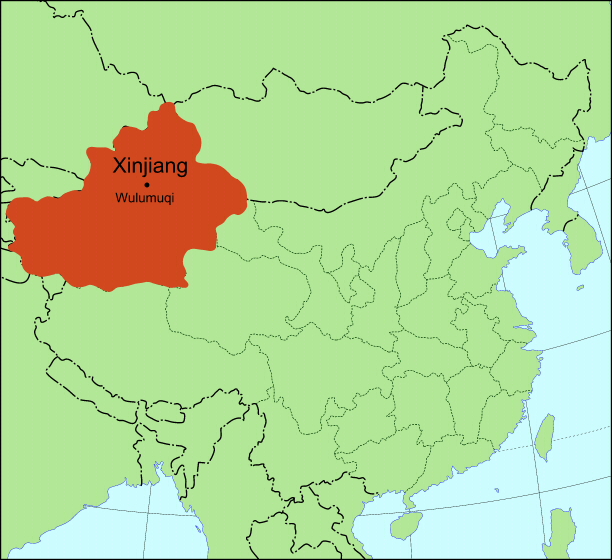
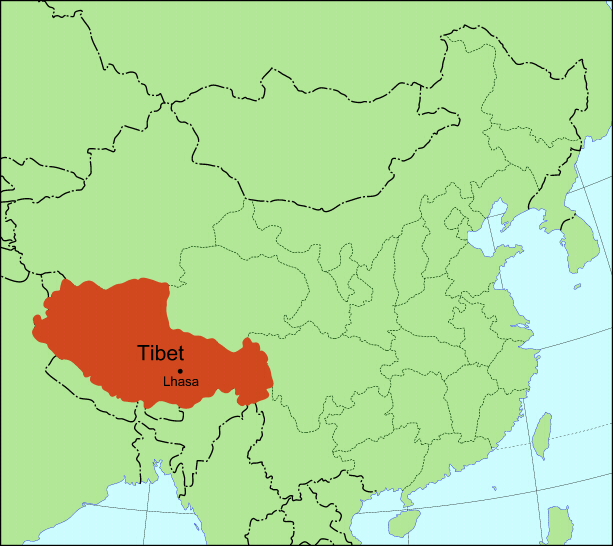
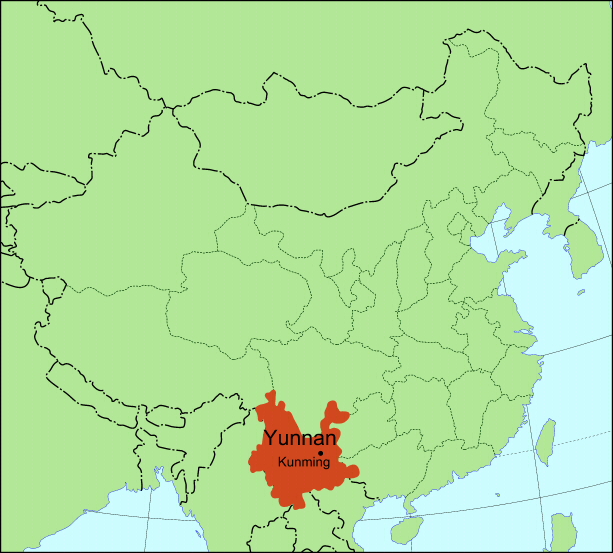
By the end of the 1830s at the latest, southwestern opium cultivation had become a part of the network of informal funding that had arisen since the 1720s to compensate for the diversion of revenue from locality to center.SOURCE: David Bello, "The Venomous Course of Southwestern Opium: Qing Prohibition in Yunnan, Sichuan, and Guizhou in the Early Nineteenth Century," The Journal of Asian Studies 62:1109-1142.
In this manner, the state itself became addicted to opium, and this dependency was a primary reason for the failure of central government prohibition in many interior localities. From the state's perspective, the opium problem ultimately concerned revenue, both in Qing China, which was spurred to action only by its conviction that drug consumption was responsible for a hemorrhage of silver abroad, and in British India, which also made a futile attempt to prohibit "illicit" production and trafficking in order to protect its own state monopoly. Opium, in the form of economic and political power, was as psychologically compelling to merchant-capitalists, bureaucrats, and politicians as it was physiologically compelling to drug consumers.
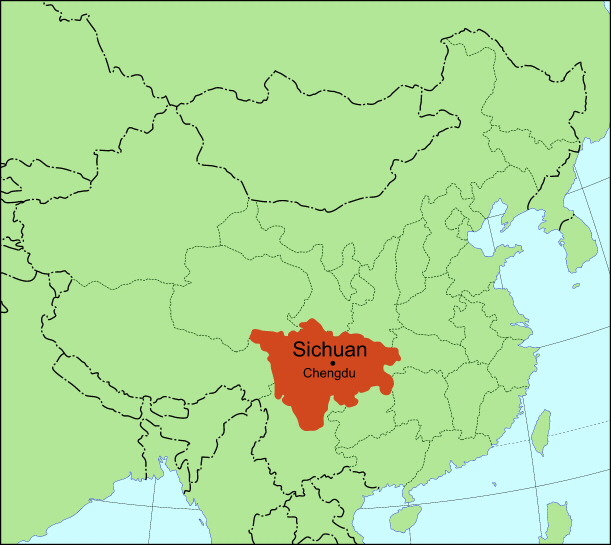
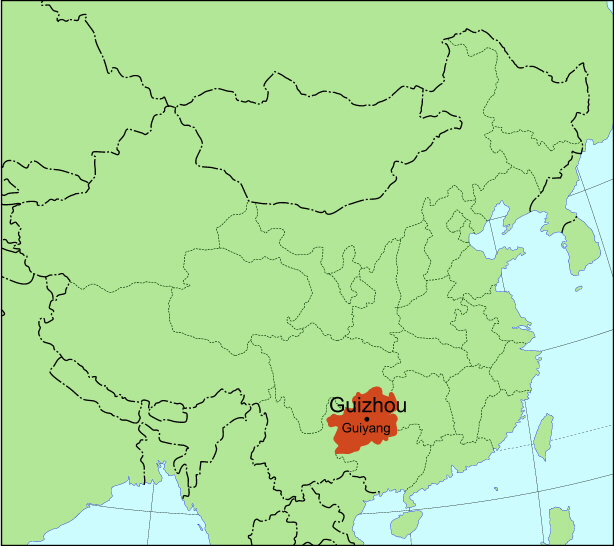
NOTES:
- "In 1881 the inspector general of customs in Shanghai, Sir Robert Hart, reported that imperial consumption of native opium equaled that of foreign imports. Most of the reports on which he based this conclusion identified the southwest, particularly Sichuan, as the main source of native opium" (Bello, p. 1134, n. 24)
- Pierre-Arnaud Chouvy, a geographer at CNRS argues in an article in Crime and International Justice 15 (1999), that opium production in today's Golden Triangle in modern Burma, Laos, and Thailand dates no further back than to the end of the 18th century and that it only began to supply the worldwide market after elements of the Kuomintang took refuge in 1949-50. Since that time the opium industry in the Burma Triangle has only grown as various governments in the region, including Myanmar, have made efforts to reduce or eradicate opium production.
10 April 2004
East Timor: The World's Newest Country
The Center for Southeast Asian Studies at the University of Hawai‘i has made freely available online (in PDF format) a brief, 33-page high-school level workbook, East Timor: The World's Newest Country, by Flo Lamoureux.
The purpose of this book is to provide students with an overview the world’s newest nation--East Timor. The narrative begins with a section on pre-colonial Timor and continues through the Portuguese era. It covers the 25-year period when Indonesia governed the entire island of Timor. After a varied and violent past, on September 27, 2002 this little known state became the United Nation’s 191st member. In addition to an accounting of important historical events, the book covers language, education, religion, women’s issues and government. The Center for Southeast Asian Studies wishes to acknowledge Dr. Douglas Kammen who carefully read and edited an early draft of the book. His experiences in East Timor significantly enriched its contents.The workbook is loaded with provocative discussion questions. Here are the questions for the history section.
- Sandalwood was the major source of income and bartered goods in Timor prior to 1500. How would sandalwood trade in the 16th and 17th centuries have differed if current international regulations related to conservation have been in effect? Compare the economic results of over-cutting sandalwood to the present day economic questions raised in the matter of drift net fishing. (For material on driftnet fishing, see http://www.nwr.noaa.gov/1salmon/salmesa/pubs/fsdrift.htm; and http://www.unescap.org/mced2000/pacific/background/drift.htm)
- The explorer, Ferdinand Magellan, sailed under the Spanish flag. When his crewmembers landed on Timor they did not claim the island for Spain. They had previously landed in the Philippines and claimed those islands for Spain, why do you think they did not plant the Spanish flag on Timor? If Timor had been a Spanish colony and more closely connected to the Philippines how do you think that would have impacted on the island’s future?
- The Portuguese were never able to maintain full control of Timor. The local Christianized Timorese resisted Portuguese rule and dealt with the Europeans only when required by commercial matters. Explain why the Topasses were more successful in their dealings with both the indigenous Timorese and the Portuguese.
- It took well over a hundred years for the Dutch and Portuguese to sign a formal treaty that divided Timor between the two European nations. Since they essentially agreed to an informal division in 1777, why do you think they did not get around to a formal treaty until 1916?
- In 1910 the Portuguese monarchy was overthrown. This was a cause for alarm among the elite class in East Timor who had developed a comfortable working relationship with the Portuguese government there. As a result of this change in the government in Portugal, a plantation economy emerged in East Timor. Compare the plantation economy with its salaried income and taxes to the economy that existed under the Portuguese monarchy where the East Timorese elite collected goods from the peasant farmers and turned them over to the Portuguese government representative.
- Explain why the Japanese Army of occupation treated West Timor differently from East Timor. Compare this to the situation in Vietnam where the French government was an ally of Germany and hence not an enemy of Japan.
- Give three reasons why post-World War II East Timor was such a poor region. Why do you think Portugal neglected it?
- Explain why the Viqueque rebellion in 1959 led to Portugal exiling rebel leaders. What role did Communism play in the Portuguese government’s decision to do this?
- In 1974 the conservative Portuguese government was overthrown and a new liberal government emerged. What policy did the new government implement that had a dramatic affect on East Timor?
- Name the three major parties that vied for power in the newly independent East Timor? Compare their goals.
- In August 1975 Fretilin controlled most of East Timor and the new nation’s independence seemed secure. Explain how the alliance of UTD, Apodeti and Indonesia reacted to this situation.
- Once Indonesian troops forced Fretilin forces into the mountains, guerrilla warfare became the norm. One matter that encouraged East Timorese to join the guerrillas in the mountains was the Indonesian policy of encirclement. Explain how this policy worked.
- Neither Australia, the United States nor Portugal supported East Timor’s struggle for democracy. Compare the reasons why the three countries did not support East Timorese independence.
- If Indonesia built more hospitals and schools in ten years than Portugal did in 400 years, why were the East Timorese so adamant about being a separate nation?
- Many brutal incidents took place in East Timor under Indonesian rule. What made the November 1991 incident outside a church a turning point in world opinion of East Timor’s quest for independence?
- What role did the 1997 economic crisis in Asia play in East Timor’s independence?
- How did the Indonesian military forces (the militia) react when Indonesia declared East Timor an independent nation? Why were the military in East Timor especially angry about it?
Jungle "Hut Cuisine": Smoked Pigeons with Marijuana Sauce
In the evening we would go shooting wood pigeon among wild marijuana fields. The birds were high on the marijuana seeds and barely able to fly but fluttered helplessly in the bushes. Their spasmodic, interrupted flights, together with their strange little cries made me think of drunken people trying to waltz. We stuffed the barrels of our home-made guns with pebbles and shot the pigeons down. Just the sound of gunshots seemed to stun them and they dropped from the trees at our feet. We killed them by seizing them by the legs and bashing their heads against trees. They made an excellent dish. We cooked them with marijuana sauce according to the local recipe. Here it is -- Smoked Pigeons with Marijuana Sauce: 'Smoke the birds with the twigs of marijuana for a day. Stuff them with lemon grass, kaffir lime leaves, garlic, ginger with a pinch of salt and wrap them in banana leaves. Boil or bake according to taste.'SOURCE: From the Land of Green Ghosts: A Burmese Odyssey, by Pascal Khoo Thwe (HarperCollins, 2002), pp. 215-217
Although we used marijuana for cooking, smoking it was strictly forbidden by the rebels. You could end up condemned to the stocks, plagued by mosquitoes, for three nights if you did that.
When the rainy season began we caught frogs. There was some danger in this, for we were not the only party who preyed on them. We usually made sure of first killing the frog-eating snakes, and then caught the frogs afterwards. Pythons, like frogs, are quite delicious to eat. They taste like smoked salmon. We also hunted moles, guinea-pigs and rats. We hung and smoked the rodents for three days before cooking them. Rat soup, minced moles and roast guinea pigs were our common recipes. The local people liked to hang the meat of porcupines until it stank like that of a corpse before they cooked it with herbs. It tasted delicious, but we had to eat it holding our noses.
At the end of 1988 we were invited by the Karen villagers to share a Christmas meal with them. The main dish had a strange flavour -- the meat in it tasted like dog meat with a strong whiff of garlic and lemon grass. After the meal, our hosts didn't wash their fingers, but sniffed at them for some time. Before we went home they told us that we had been eating monkey. Suddenly, I wanted to throw up. For the Karen, the meat of monkey was a typical Christmas dish, like turkey or goose in the West. They believed it was a gift from God, and that even the smell should not be wasted.
Tender wild banana trunks were available throughout the year, and we used them in soups along with lentils and vegetables. Truffles and wild mushrooms were in season at the beginning of the monsoon. During the cold season, when the bamboo shoots had matured, bamboo mushrooms became available.
We had more than one way of cooking rice without pots and pans, depending on the situation we were in. It could be cooked in bamboo stems: you soak the rice in green bamboo stalks for half an hour, and stuff the open end of the bamboo with grass. Roast the bamboo slowly over the fire until the rice is cooked, then peel off the bamboo skin. In this method, the rice comes in cartridges. Another method we called 'rebel style'. The rice is soaked in a towel, linen or sarong for more than an hour. Dig a hole in the ground, one foot deep, bury the rice bag, then make a fire on top. Steamed rice will be ready within fifteen minutes. We used this method often when the rebels were on the run.
09 April 2004
Morobe Field Diary, December 1976: Texts on Tape
Texts on tape have been eluding me and getting me worried as hell. I felt something would turn up but I wasn't sure how and how good it would be. Well, last nite I hit a gold mine. During the day the kansol put out a story of war [WW II] coming to the area that was 1st class -- well organized, clear and slow with good constructions I've wanted and a sprinkling of new vocabulary. And I forgot to press the record button. I was ready to bash in my head but the kansol said, "well, good, now you've heard it so you'll understand it better next time: I've practiced telling it and you've practiced hearing it. Let's go chop some poles for a smoking platform and come back and try again this evening."
Physical labor was, along with less worry about tapes, exactly what I needed to dispel a case of hemorrhoids that was plaguing me. That done, we came back, rested up and that evening after dark I hauled out the tape recorder and the kansol told his story again -- not as good as during the day but covering very much the same material and almost exactly the same length. Before his wife put her account of the preparation of food by women, another fellow came by who is chock full of stories and has a clear slow way of speaking besides. He lives in Paiewa but is visiting thank God. He told a good personal experience war story with Japanese pidgin ["A, banana sabis, ye?" = ('banana free, okay?') uttered by a starving Japanese straggler], conversation and dangerous experiences. He also told a somewhat shorter story about a woman who didn't want to get married, supposedly true from before contact times. His war story is about 35-40 min. (This guy's brother is a truck driver on the Mt. Hagen to Lae [Highlands Highway] run and is such a talker that his cab mates don't get any sleep on the 12 or so hour ride.) Finally the kansol's wife put her piece on tape clearly & concisely. I've got about 70-80 minutes of unbroken talking on the several cassettes I went thru last nite. I want to transcribe as much as I can here so I can get unstuck as I go along.
The day before, in my desperation I recorded some old men who got together to put something on tape after putting me off several times. They got together, bullshat about what they were going to say and decided they would do it better later. I got some revenge by surreptitiously recording them but it's going to be hard to transcribe. That nite I was carrying my recorder to ask a man to tell me about canoe-building (another promise). I started talking with some kids around a fire and secretly pressed the record button. It too will be hard to transcribe but has good mixed language conversation (30 min.). [The two surreptitious tapes remain untranscribed.] So, I'm breathing much easier and my asshole itching less.
Physical labor was, along with less worry about tapes, exactly what I needed to dispel a case of hemorrhoids that was plaguing me. That done, we came back, rested up and that evening after dark I hauled out the tape recorder and the kansol told his story again -- not as good as during the day but covering very much the same material and almost exactly the same length. Before his wife put her account of the preparation of food by women, another fellow came by who is chock full of stories and has a clear slow way of speaking besides. He lives in Paiewa but is visiting thank God. He told a good personal experience war story with Japanese pidgin ["A, banana sabis, ye?" = ('banana free, okay?') uttered by a starving Japanese straggler], conversation and dangerous experiences. He also told a somewhat shorter story about a woman who didn't want to get married, supposedly true from before contact times. His war story is about 35-40 min. (This guy's brother is a truck driver on the Mt. Hagen to Lae [Highlands Highway] run and is such a talker that his cab mates don't get any sleep on the 12 or so hour ride.) Finally the kansol's wife put her piece on tape clearly & concisely. I've got about 70-80 minutes of unbroken talking on the several cassettes I went thru last nite. I want to transcribe as much as I can here so I can get unstuck as I go along.
The day before, in my desperation I recorded some old men who got together to put something on tape after putting me off several times. They got together, bullshat about what they were going to say and decided they would do it better later. I got some revenge by surreptitiously recording them but it's going to be hard to transcribe. That nite I was carrying my recorder to ask a man to tell me about canoe-building (another promise). I started talking with some kids around a fire and secretly pressed the record button. It too will be hard to transcribe but has good mixed language conversation (30 min.). [The two surreptitious tapes remain untranscribed.] So, I'm breathing much easier and my asshole itching less.
Morobe Field Diary, December 1976: Swimming in Fish Names
Things are getting pretty busy for me now. Finishing up the lexicon and trying to get some of the half-dozen or more texts people haven't gotten around to giving me. Only two weeks to work's end and I'm paranoid that I've left out something important grammatically that the texts won't solve for me. Grammatical elicitation the way we did in Field Methods class is nearly impossible with informants as unschooled as most of mine. I don't like it or trust it anyway. I prefer texts but people are very reluctant to give me stuff off the top of their heads, especially if it's cultural info -- they want someone authoritative to accompany them in the telling or else they practice first and wear out their interest in that so they are not keen on repeating it again for the tape.
Lately I've worn out my patience with eliciting fish names from two huge tomes -- one quite authoritative ([Munro's 1967] Fishes of New Guinea) but with inadequate (i.e. only B&W) pictures; the other (Guide to Fishes, an Aussie book) has good pictures (in color and [of] live [fish]) but is not well-arranged and not exhaustive and shows little of the relative size so a snapper can be called an anchovy. Combine that with some hard to distinguish subgroupings of fish (esp. among goatfish, trevallies and sea bass) and imperfect but confident knowledge of most everyone and the result is an incredibly frustrating job trying to match Nu. to genera & species. I am interested in folk classification and its relation to academic classification and was prepared for some difference but mostly the correlation between the two is pretty good (after I've filtered out misnamings which I can often tell are wrong because they cross genus or family lines). In some families there are names for the majority of individual species -- some grouped together, usually on the basis of markings when shape is the same: mottled, banded, striped; and often on the basis of habitat.
The big men [usually elders] are supposed to be the authorities (on everything: even ladies underwear if it was anything elaborate probably) but they often can't see the page clearly. Everyone is convinced that others don't know what they're talking about and that a consensus (20 people going thru 20 fishnames for 3 hours is impossible) will solve everything. I'm well past the point of diminishing returns but some still come volunteer to straighten it all out for me (and give yet another name to some picture beside which I've scribbled 3 names already). For most now I have statistics like 4 for, 2 against (or 2 for 1 name, 1 each for the others) so I've told them I don't want anything more about fish to upset me. On the whole the world of Nu. fish naming is as unsettled as the world of zoological taxonomy when it comes to species. Genera & families work out OK. I figure (or hope) my effort is worthwhile: it not only boosts my dictionary considerably but is an area that is worth comparing carefully with other Austronesian names & classificatory systems since they are most all sea people.
Lately I've worn out my patience with eliciting fish names from two huge tomes -- one quite authoritative ([Munro's 1967] Fishes of New Guinea) but with inadequate (i.e. only B&W) pictures; the other (Guide to Fishes, an Aussie book) has good pictures (in color and [of] live [fish]) but is not well-arranged and not exhaustive and shows little of the relative size so a snapper can be called an anchovy. Combine that with some hard to distinguish subgroupings of fish (esp. among goatfish, trevallies and sea bass) and imperfect but confident knowledge of most everyone and the result is an incredibly frustrating job trying to match Nu. to genera & species. I am interested in folk classification and its relation to academic classification and was prepared for some difference but mostly the correlation between the two is pretty good (after I've filtered out misnamings which I can often tell are wrong because they cross genus or family lines). In some families there are names for the majority of individual species -- some grouped together, usually on the basis of markings when shape is the same: mottled, banded, striped; and often on the basis of habitat.
The big men [usually elders] are supposed to be the authorities (on everything: even ladies underwear if it was anything elaborate probably) but they often can't see the page clearly. Everyone is convinced that others don't know what they're talking about and that a consensus (20 people going thru 20 fishnames for 3 hours is impossible) will solve everything. I'm well past the point of diminishing returns but some still come volunteer to straighten it all out for me (and give yet another name to some picture beside which I've scribbled 3 names already). For most now I have statistics like 4 for, 2 against (or 2 for 1 name, 1 each for the others) so I've told them I don't want anything more about fish to upset me. On the whole the world of Nu. fish naming is as unsettled as the world of zoological taxonomy when it comes to species. Genera & families work out OK. I figure (or hope) my effort is worthwhile: it not only boosts my dictionary considerably but is an area that is worth comparing carefully with other Austronesian names & classificatory systems since they are most all sea people.
07 April 2004
A Burmese Padaung View of the 'Wild' Kayah
Our first contact with the 'wild' Kayah came when we were received into a house on a hilltop owned by a shaman. He squatted by the fireplace smoking a pipe as if he were a guardian ghost of the place. He made me think of an unwrapped mummy, and he neither smiled nor spoke to us. We felt like intruders who had wandered into an ancient tomb, and soon set off to the village spring for a shower.SOURCE: From the Land of Green Ghosts: A Burmese Odyssey, by Pascal Khoo Thwe (HarperCollins, 2002), pp. 203-204
At the spring we waited for the villagers to finish their own shower. They included some stark-naked young women, who were unembarrassed and unashamed. As we watched them they talked to us with the familiarity of old friends. We felt ashamed at our curiousity about this (for us) novelty. When dressed, these women wore a black tunic which revealed one of their breasts. We were told later that they would not cover the naked breast until they were betrothed.
A traditional 'wild' Kayah woman is like an uninhibitedly colourful work of art. Her clothes are made of home-woven material in which red and black predominate. She wears black-lacquered cotton-thread rings beneath her knees in large lumps that look like twin beehives. Bunches of silver coins dangle from her neck along with a few strings of semi-precious stones. The younger women wear cone-shaped silver earrings that look like bunches of miniature carrots, while the married ones stuff their big earholes with silver cylinders. A married woman also wears a red turban on her head and a white sash around her waist. She walks like an elephant, slow and with jingling sounds at every step, reminiscent of the tinkling bells on a Burmese pagoda top. These gorgeously caparisoned females scratched their bodies liberally and spat copiously. And all the Kayah, children included, continually smoked pipes.
Burmese Views of the Mysterious West
To me [now starting college], Mandalay (a place which, as I later learned, foreign visitors enjoyed as a sleepy backwater that time forgot) was an amazing metropolis, a town of astounding variety and sophistication, a city that never slept. In Mandalay I learned how to use the telephone and the electric kettle....SOURCE: From the Land of Green Ghosts: A Burmese Odyssey, by Pascal Khoo Thwe (HarperCollins, 2002), pp. 120-121
My first introduction to foreign gadgetry went with the first stories I began to hear about the wonders of the West. I was told that people in the West could cook their meals without pots and pans and stoves. I was puzzled how this could be possible. The few Burmese magazines that were not government-controlled regaled their readers with these strange stories which they gleaned -- in embellished form -- from the British tabloid the Sun, from Newsweek, and from the novels of Jeffrey Archer, one of the few living English writers allowed to be published in Burma.
The beliefs we absorbed about the West strangely resembled the fantastic stories early Western travellers sent back about the Mysterious East. One teacher at school had told us that in the West things were so advanced that pigs could be grown on trees, and that a type of furniture had been developed that could be eaten if ever food supplies ran low. He also explained to us that the West got so cold in winter that if you peed outdoors the urine would instantly freeze so that you had to snap it like a stick. We had a pretty good sense that these were tall tales -- but they made better listening than the equally tall tales of the regime. When we learned that the Americans got to the moon, for instance, we had solemnly been informed by a fanatical socialist-nationalist teacher: 'Our ancestors got there centuries ago on the astounding flying machines that the genius of the Burmese had perfected -- secrets alas now lost.' We learned something important from all this: that the Burmese, after nearly thirty years of isolation from the rest of the world, constantly subject to official propaganda urging them to detest and despise the West, were in fact fascinated by the Western way of life and ignorantly credulous about it.
This reminds me of a conversation I had with an older man in Papua New Guinea in 1976 who had heard something about a conflict in Berlin a decade and a half earlier, and wanted to know how things had finally turned out and who our current Kennedy was. I can't remember if the conversation took place before or after Carter was elected to be our next Kennedy.
Zhao Ziyang Ill
China-based blogger Andrés Gentry calls attention to a recent New York Times report that Zhao Ziyang is ill.
Earlier demonstrations in Tiananmen to honor another popular leader, Zhou Enlai (d. 1976), culminated in the Democracy Wall movement.
This should be getting more play in the China-blog community.... Why is that important?Andrés then adds further insights.... lower-level party officials, or students or intellectuals outside the party, may make Mr. Zhao's death an occasion to press for political liberalization. China's long tradition of paying homage to the dead makes it unseemly for the police to repress mourners, potentially opening a window for people to express grievances along with condolences.
In fact, the 1989 demonstrations first gathered steam after the death of the reform-minded leader who preceded Mr. Zhao as Communist Party chief, Hu Yaobang, who died 15 years ago this month.
"It is clear that leaders will have taken every measure to prevent any protests from happening," said one Chinese political analyst who asked not to be quoted by name. "But the impact of such an event would be very unpredictable and risky for the leadership."
There are other more recent instances of the government getting caught flatfooted in their response to demonstrations. The Belgrade Embassy bombing springs immediately to mind. While there was certainly a lot of anti-foreign/anti-American anger, I know for some people that was simply a vehicle to express their dislike of the CCP. It was a dangerous time for everyone really since if the demonstrations continued it's likely that they would have begun focusing their energy on China at least as much as on NATO/America. However, if they were cut off too soon then the government could be accused of being unpatriotic and anger would definitely have moved on from foreigners to the CCP.See also his earlier post on the likelihood of massive demonstrations after Zhao's death and the CCP's need to come to terms with the events at Tiananmen in 1989.
Earlier demonstrations in Tiananmen to honor another popular leader, Zhou Enlai (d. 1976), culminated in the Democracy Wall movement.
For some, the Cultural Revolution marked the beginning of an independent political consciousness and the means to express it, as seen, for example, in the controversial wall poster signed by Liyizhe, a pseudonym of its three authors, that appeared on November 7, 1974 in Guangzhou. It denounced the lawlessness, despotism, recklessness, and killings of the Cultural Revolution and called for democratic and individual rights. A larger-scale expression of increasing political independence occurred on April 5, 1976 with a demonstration in Tiananmen Square supposedly to honor Zhou Enlai, who had died in January 1976 without much official note. In actuality, the demonstration was an organized attack on the Cultural Revolution and the tyranny of the Gang of Four and implicitly of Mao. The April 5th demonstration was the first time since 1949 that ordinary Chinese had taken the initiative to launch their own movement and establish a public space where people could freely express their opinions. But it was suppressed after just a few days.Whereas purged party officials and skilled workers had planned the parades and the placards to be carried into the Square months before April 5, 1976, the Democracy Wall movement appears to have begun somewhat spontaneously. Against the background of the party's official repudiation of the designation of the April 5th demonstration as a "counter-revolutionary" movement in the fall of 1978 and the official media's calls for "socialist democracy and rule of law," individuals and groups suddenly began to put up large-character posters and gathered together to discuss political issues at the Xidan wall on a busy street in the middle of Beijing in November 1978.For more on one of the principal Democracy Wall activists, see this post on Wei Jingsheng.
05 April 2004
Out of the Ashes: Deconstruction and Reconstruction of East Timor
The Australian National University's new E Press has placed online a new (2003) electronic edition of Out of the Ashes: Deconstruction and Reconstruction of East Timor, edited by James J Fox and Dionisio Babo Soares, described thus:
Out of the Ashes is a collection of essays that examine the historical background to developments in East Timor and provide political analysis on the initial reconstruction stage in the country's transition to independence. The volume is divided into three thematic sections - background, assessment and reconstruction - bringing together the experiences and knowledge of academic researchers and key participants in the extraordinary events of 1999 and 2000.Here are some excerpts from the chapter on historical background.
After years of Indonesian rule, the people of East Timor voted to reject an offer of autonomy[,] choosing instead independence from Indonesia. This decision enraged pro-integrationist militia who, backed by the Indonesian military, launched a program of violence and destruction against the inhabitants of East Timor. President Habibie eventually agreed to the presence of a United Nations peace-keeping force, but by this stage East Timor had been ravaged by destruction.
The new East Timorese government faced the challenges of the future with an understanding that the successful struggle for independence was both a culmination and a starting point for the new nation. As the events of 1999 recede, many of the issues and challenges highlighted in Out of the Ashes remain of central significance to the future of East Timor. These essays provide essential reading for students and interested observers of the first new nation of the 21st century.
All the languages of Timor belong to one of two major language groupings: the Austronesian language family or the Trans-New Guinea phylum of languages (see Map 1)....
One striking feature of the socio-linguistics of Timor is the remarkable contrast between the eastern and the western halves of the island. Almeida (1982) lists over 30 different languages and dialects in the East compared with only three languages in the West.... This sociological difference between East and West is, to a large extent, the result of initial Portuguese historical involvement in the western half of Timor, which gave rise to the expansion of the Atoni population. As with much else on Timor, to understand this difference between East and West requires an historical perspective. It is essential therefore to consider the history of Timor over the past 450 years....
The Portuguese were the first Europeans attracted to Timor by th[e] sandalwood trade. It took over 50 years after the Portuguese conquest of Malacca in 1511 to establish a presence in the area....
In 1561-62, the Dominicans built a palisade of lontar palms to protect local Christians but this was burnt down the year after by Muslim raiders, prompting the Dominicans, in 1566, to erect a more permanent stone fortress on Solor. For its first 20 years, the captain of this fort at Solor was nominated by the Dominican Prior in Malacca. Around this fort there developed a mixed, part-Portuguese population of local Christians, many of whom were themselves involved in the sandalwood trade with Timor....
The Dominican fort on Solor had a chequered history. Plundered in a local uprising in 1598, the fort fell, after a long siege, to the Dutch in 1613. According to Dutch sources, their forces were able to take the fort because over 500 of its occupants were, at the time, on a sandalwood-trading expedition to Timor.
Instead of sailing for Malacca, the thousand strong population of the fort, later joined by those from Timor, transferred to Larantuka, a harbour on the eastern end of Flores and from there, established themselves at Lifao on the north-west coast of Timor. With their strongholds on both Flores and Timor, this mixed, part-Portuguese population of local islanders resisted all attempts to dislodge them. This population became known as the Larantuqueiros or as the Tupassi ('Topasses', purportedly from the word for hat, topi, because the Topasses regarded themselves 'Gente de Chapeo': 'People of the Hat') - or, as was common in all Dutch documents, the 'Black Portuguese' (Swarte Portugueezen). In the language of the Atoni Pa Meto population, who had the longest established contact with them on Timor, these Topasses were known as the Sobe Kase: 'The Foreign Hats'. (Yet another variant of this designation, among the Rotinese, on the small island at the western tip of Timor, was Sapeo Nggeo: 'The Black Hats'.)
These Topasses became the dominant, independent, seafaring, sandalwood-trading power of the region for the next 200 years. They were a multilingual group. Portuguese was their status language which was also used for worship; Malay was their language of trade, and most Topasses spoke, as their mother-tongue, a local language of Flores or Timor.
The British buccaneer, William Dampier, visited Lifao in 1699 and has provided a perceptive description of this mixed, multilingual Topass community:These [the Topasses] have no Forts, but depend on their Alliance with the Natives: And indeed they are already so mixt, that it is hard to distinguish whether they are Portugueze or Indians. Their Language is Portugueze; and the religion they have, is Romish. They seem in Words to acknowledge the King of Portugal for their Sovereign; yet they will not accept any Officers sent by him. They speak indifferently the Malayan and their own native Languages, as well as Portugueze....Neither the Dutch nor the Portuguese who were loyal to the Viceroy of Goa were able to exert any substantial control over them. On Timor, there were times when the interests of the Portuguese Viceroy and those of the leaders of the Black Portuguese coincided. Just as often, however, the Black Portuguese opposed both the Portuguese Viceroy and the Dutch East India Company with whom they also carried on trade. However often the Viceroy's delegates were rejected, Portuguese friars were always welcomed on Timor and moved freely throughout the island....
In 1777, the Portuguese in Dili regarded Timor as divided into two provinces: a western province called Servião, inhabited by the Vaiquenos (Dawan or Atoni) and consisting of 16 local kingdoms (reinos) and an eastern province called Bellum (or Bellos), inhabited and dominated by the Belu (or Tetun) and comprising no less than 46 small kingdoms. Servião covered much of the area controlled by Topasses....
The Dutch drew a different picture of this same political situation. In 1756, the Dutch East India Company sent a distinguished envoy by the name of Paravicini to order its relations on Timor. This renowned Commissaris returned to Batavia with a contract treaty purporting to have been signed by all of the rulers of Timor in addition to those of the islands of Roti, Savu, Sumba and Solor: 48 signatories on a lengthy document with 30 clauses. Whether, in fact, he obtained the signed agreement of all of these rulers, the contract of Paravicini represented the political geography of native rule more accurately than did Portuguese documents for the same period....
During the Napoleonic wars, the British occupied the Dutch fort at Kupang and laid claim, for a brief period, to Dutch colonial possessions on Timor. When, in 1816, the British returned colonial authority to the Dutch, the Dutch set out to determine their areas of supposed control in relation to the Portuguese. Almost immediately thereafter there occurred the first of a series of disputes over the borders between the two colonial powers....
[T]he Portuguese mounted no less than 60 armed expeditions between 1847 and 1913 to subdue the Timorese. In 1860, even as he was negotiating with the Dutch over 'Portuguese territory on Timor', the Governor of Dili, Affonso de Castro, described the situation with remarkable candour: 'Our empire on this island is nothing but a fiction'....
From the earliest Chinese sources to the final reports of the colonial powers, all commentators agree that Timor was comprised of kingdoms and rulers. Traditional kingdoms dating back to at least the fourteenth century imply well-established, indeed fundamental, ideas about order and political relations. Curiously, however, in the long history of European contact with Timor, virtually no commentator has credited the Timorese with a political philosophy or has sought to explore and to treat seriously indigenous ideas of authority....
Relations among the local polities of Timor were continually changing. Alliances among these polities shifted, especially as internal relations changed; there was regular, seasonal raiding into each other's territories - some in the form of ritual headhunting; and migration of clan groups in search of land and water was common. The Portuguese and Dutch both contributed to this situation.
In return for diverting the sandalwood trade to Lifao and other ports on the north coast of the island, the Topasses formed close alliances with the local Atoni Pa Meto polities and in several instances became the rulers of these polities. They were the first to introduce muskets to the Timorese and they increased the supply of simple iron tools. The Dutch (rather than the Portuguese) introduced maize to the island and promoted its planting, initially in the area around Kupang... This combination of muskets, iron tools and maize, provided principally to Atoni groups, changed the face of West Timor. With a new highly productive crop, the tools to plant it and the firearms to expand aggressively and open new land in others' territory, the Atoni population, previously subordinate to Tetun rulers who controlled the sandalwood trade, rapidly spread through much of West Timor, assimilating other groups to Atoni modes of livelihood and culture.
The language map of Timor today attests to this Atoni expansion over the last 400 years. Only the remnant Helong speakers, now confined to the western tip of Timor and the island of Semau, give some indication of what West Timor may have been like before the Atoni expansion....
It was never just the Topasses, Dutch and Portuguese who influenced developments on Timor. The Chinese, who initiated the earliest trade with Timor for sandalwood, were a major influence as well. Dampier who visited the Topass settlement at Lifao in 1699 noted the presence of 'China-Men, Merchants of Maccao' living among the Topasses. This Chinese connection has long been crucial on Timor and at times has been paramount. As Topass control of trade in the interior of Timor declined, Chinese control increased....
Prior to the Atoni expansion, there was an earlier expansion of the Tetun people, probably from what the Tetun regard as their traditional centre of origin on the central south coast. This expansion was both northward and along the south coast. As a consequence of this expansion, there are several distinct forms of Tetun. These are generally described as different dialects, though there are considerable differences among them....
Writing about the formation of Tetun Dili which is also known as 'market Tetun' (Tetun Prasa or Tetum Praça), the historian and language scholar, Luis Thomaz, admits that 'the origin of the use of Tetun as a lingua franca in East Timor is very obscure'.... Dili is in an area where one might have expected the Mambai language to have been chosen as a vehicle for communication since the town itself is located within an area originally inhabited by Mambai-speakers.
Promotion of Tetun by the Catholic church toward the end of the nineteenth century was an important factor in the eventual establishment of Tetun as a lingua franca....
The everyday Tetun of Dili has a simplified syntax and shows strong Portuguese (and, more recently, Indonesian) influences. It could almost be considered a creole derived from vernacular Tetun....
Dampier's 1699 account of the Topass community portrays a multilingual community: Portuguese, Malay and at least one local Timorese language. Translated into the present, this would suggest a combination of Tetun, Indonesian and Portuguese. This simple translation, however, misrepresents the present situation: Tetun and Indonesian are languages understood by a large proportion of East Timorese whereas the use of Portuguese is still limited. Moreover, for most East Timorese, Tetun is their 'second' Timorese language. Indonesian, whether or not it continues to be taught in schools, will - as in the past - remain the language of inter-island communication. The teaching of Portuguese will inevitably conflict with the need of the East Timorese to learn English to communicate internationally. Whatever solution is worked out over time, the people of East Timor are likely to remain a multilingual population.
04 April 2004
Rainforest Gifts: Sago and Sago Grubs
This mouthwatering webpage describes some delicacies that the rice-loving Javanese who've resettled all over eastern Indonesia don't seem fully to appreciate:
Easy meal: Sago Palm (Metroxylon) is far more productive than rice, producing four times more starch, 100-200 kg per palm, enough to feed a family of 4-5 for a month. And it is the least labour-intensive starch to harvest. It takes one person 10 days to process a palm, faster if a group works on it. Sago is the staple carbohydrate for many people in Southeast Asia, Oceania and Pacific Islands where Sago Palms are found.Sweeter than roasted marshmallows. Or so I hear. The related Arthropods: Bugs for Breakfast page is also highly recommended, though perhaps not at mealtime. Here's a sample:
Asmat sago rituals: For the Asmat, the Sago Palm is the only sure source of calories in their mudflat homelands. They treat the Sago Palm not merely as a human being, but as a life-giving mother, the sago being her child....
Sago grubs are the larvae of the Capricorn Beetle (Rhynchophorus ferrungineus/bilineatus). The Asmat celebrate special occasions, such as the consecration of a new ritual house with an elaborate party featuring the grub. A huge bark container is prepared in the centre of the house and each guest is required to deposit his share of the grub. Each person, however, tries to cheat by giving as little as possible without being caught. Once all have made their contribution, the container is opened, spilling out the grubs, signifying new life emerging from a mother. The grubs are then enjoyed raw or roasted.
The Korowai also have sago festivals. Preparations for such a party lasts for 3 months. The head of the extended family initiates the celebration by sending out invitations to all family members and others with close links to the family. They build a large party house with all the special features needed to enjoy the sago grub: a traditional fire which is always kept burning, special racks to store the grubs. They cut down Sago Palms, sometimes up to 200, and make holes in the trunks for the beetles to enter, then leave the trunks on the ground. The beetles are only attracted to damaged palms, and quickly lay their eggs in the starchy palms. In the meantime, the family also harvest sago in the regular way, in preparation for the party. In about 6 weeks, the beetle larvae are nice and plump and just about to pupate. Each palm may contain up to 100 sago grubs. The family then sends out invitations far and wide to join the party. The grubs are harvested by cutting through the palm. The grubs are eaten raw, or mixed with sago flour and steamed. Often with lots of dancing and merrymaking.
You probably regularly eat bugs, without even knowing it! Insects are a part of all processed food from wheat meal for bread to tomato ketchup. It's impossible to keep mass-produced food 100% insect-free. There are regulations stating the maximum amount of bug bits that food can contain and still be fit for human consumption.
Red about it: the food colouring cochineal is extracted from the crushed bodies of scale insects that feed on the prickly pear. Cochineal is widely used in many popular food items--read the labels!
Morobe Field Diary, November 1976: Demographics
The population figures of nearby villages I obtained from the kiap in Morobe [Patrol Post] follow:
[The predominant local language of Kui & Buso is Kela.
Sipoma is the only village that speaks Numbami.
Both Kela and Numbami are Austronesian languages.
The predominant languages of Paiewa and Maiama are non-Austronesian (Papuan),
members Binanderean family.]
This confirms my impression that the eligible young men of this village far outnumber the young women.
More statistics: Two Sepiks are married into the village. They work at the timber co. and so are in the village mostly on weekends. Their children are too young to talk yet but will probably speak Nu. The fathers mostly don't speak Nu. but understand some. One Wain man recently married in -- also works for the timber co. -- no children yet. Two Kui women married in -- both speak Nu. and kids of both do also but I'm less sure about one family. One Kui woman doesn't speak Nu.; neither do her kids though they may understand it fairly well. One Morobe woman speaks Nu., her kids speak Pidgin [Tok Pisin] and their father speaks T.P. to them most of the time too. Also one Markham woman speaks Nu. as do her kids I believe; her husband is Nu. & away a good bit.
Next year one young Nu. is off to do 5th & 6th form at the new national H.S. at Aiyura (where SIL headquarters is), one if off to Sogeri H.S. near Mosbi [Port Moresby], 2 off to Kerevat in Rabaul (brother to 5th form; sister to 6th). One girl and 2 boys will go to Junior High in town. Some people working away from the village:
1 agricultural inspector (Jack S.)
1 malaria service mosquitologist (Tom S.)
1 development bank clerk (Kaukisa S.)
1 N.S.W. bank teller (off to Mosbi for training)
1 teacher at Kaiapit
1 NCO in PNG Army (Igam Barracks)
1 in forestry service (Bing Siga, in Aust. for training)
1 radio repairman in Lae
1 cattleman (half Nu., half Sepik)
1 machine repairman in Wau (half Nu., Peter)
1 policeman at Rabaul (Marawaku's son)
1 assistant kiap at Boana (__ Siga)
1 store clerk in Mosbi (__ Siga)
1 secretary at UniTech (Aga __)
1 medic at Morobe (Dei)
1 in fisheries (Lukas)
1 in transport co. (Panett)
1 teacher at Kui
In addition, Daniel/Siga said that everyone older in the village except his mother has gone to Yabem School (max. 4 years). Evidently they went thru in age cohorts: Abu Bamo's, then Giyasa's, then Yali's, then Siga's. The war disrupted people like Lukas, who claims he's had only about 1 year of school but has a well-respected business head.
NOTE: Blogger doesn't turn off the <pre> tag very predictably. It wouldn't wrap the paragraph after </pre>, so I had to force linefeeds. I initially tried the <table> tag, but blogger added way too much white space above it.
Village   Total     Adults      Children    Adults outside province

Buso      108       24m 27f     23m 27f      3m 1f

Kui       333       81m 81f     88m 69f      8m 2f

Sipoma    294       84m 69f     69m 58f     12m 2f

Paiewa    276       69m 72f     70m 61f      4m 0f

Maiama    483
[The predominant local language of Kui & Buso is Kela.
Sipoma is the only village that speaks Numbami.
Both Kela and Numbami are Austronesian languages.
The predominant languages of Paiewa and Maiama are non-Austronesian (Papuan),
members Binanderean family.]
This confirms my impression that the eligible young men of this village far outnumber the young women.
More statistics: Two Sepiks are married into the village. They work at the timber co. and so are in the village mostly on weekends. Their children are too young to talk yet but will probably speak Nu. The fathers mostly don't speak Nu. but understand some. One Wain man recently married in -- also works for the timber co. -- no children yet. Two Kui women married in -- both speak Nu. and kids of both do also but I'm less sure about one family. One Kui woman doesn't speak Nu.; neither do her kids though they may understand it fairly well. One Morobe woman speaks Nu., her kids speak Pidgin [Tok Pisin] and their father speaks T.P. to them most of the time too. Also one Markham woman speaks Nu. as do her kids I believe; her husband is Nu. & away a good bit.
Next year one young Nu. is off to do 5th & 6th form at the new national H.S. at Aiyura (where SIL headquarters is), one if off to Sogeri H.S. near Mosbi [Port Moresby], 2 off to Kerevat in Rabaul (brother to 5th form; sister to 6th). One girl and 2 boys will go to Junior High in town. Some people working away from the village:
1 agricultural inspector (Jack S.)
1 malaria service mosquitologist (Tom S.)
1 development bank clerk (Kaukisa S.)
1 N.S.W. bank teller (off to Mosbi for training)
1 teacher at Kaiapit
1 NCO in PNG Army (Igam Barracks)
1 in forestry service (Bing Siga, in Aust. for training)
1 radio repairman in Lae
1 cattleman (half Nu., half Sepik)
1 machine repairman in Wau (half Nu., Peter)
1 policeman at Rabaul (Marawaku's son)
1 assistant kiap at Boana (__ Siga)
1 store clerk in Mosbi (__ Siga)
1 secretary at UniTech (Aga __)
1 medic at Morobe (Dei)
1 in fisheries (Lukas)
1 in transport co. (Panett)
1 teacher at Kui
In addition, Daniel/Siga said that everyone older in the village except his mother has gone to Yabem School (max. 4 years). Evidently they went thru in age cohorts: Abu Bamo's, then Giyasa's, then Yali's, then Siga's. The war disrupted people like Lukas, who claims he's had only about 1 year of school but has a well-respected business head.
NOTE: Blogger doesn't turn off the <pre> tag very predictably. It wouldn't wrap the paragraph after </pre>, so I had to force linefeeds. I initially tried the <table> tag, but blogger added way too much white space above it.
03 April 2004
A Motorcycle Ride through Chernobyl's Dead Zone
Impearls, a blog with footnotes and appendixes, reminds me to link to a photo essay in which:
A motorcyclist named Elena, her 147-horsepower Kawasaki “Ninja,” and scientist's access pass provide us with a troubling and unparalleled tour of the ruined landscape about the city of Chernobyl in the Ukraine with its doomed nuclear power plant which, in 1986, devastated the area with radiation, destroying surrounding cities and towns as living communities and leaving the whole region uninhabitable for, it's claimed, six hundred years. Elena's pictorial diary of her visit is eerily reminiscent of films like The Omega Man and post-apocalypse science fiction wherein one navigates through a radioactive landscape as one would through a minefield, armed like a lifeline with geiger counter and dosimeter. The heavily radioactive “magic woods” that Elena regards -- from a distance -- are horrifying. Much of the rest has the melancholy of a recent Pompeii. Don't miss it. (Thanks to Armed Liberal at Winds of Change.)Fast internet connection recommended.
Essay on Ataturk's Legacy Beyond Turkey
A few days ago, the Head Heeb posted a thought-provoking essay on Atatürk's legacy:
Mention Kemalism, and you're likely to ignite a debate about the history of twentieth-century Turkey. Books have been written about whether Atatürk's reforms were racist and quasi-fascist, necessary to Turkish modernization or both. There has been very little discussion, however, about Kemalism outside Turkey. Although some aspects of Kemalist ideology were unique to the Turkish situation, a case could be made that Kemalism is one of the twentieth century's dominant models for ethnic conflict resolution.The whole essay is worth a careful read--as are the comments in response.
One of the legacies of colonialism is the creation of artificial nations, often including diverse ethnic groups with a history of conflict. The governments of such countries have followed two primary conflict-resolution models. The first involves co-opting pre-existing ethnic identities into the national political infrastructure by ceding each group an official or quasi-official political space. This can take the form of federalism, formal power-sharing arrangements within a unitary state, special legal status or unofficial rotation of senior posts between ethnic groups. Such co-option is not always conducted on a basis of equality - Malaysia [emphasis added], for instance, assigns its Indian and Chinese minorities a distinctly subordinate political role - but it recognizes and supports the continued existence of separate identities within a single nation.
The second model rejects co-option in favor of replacing pre-existing identities with a created nationalism, and this is where Kemalist roots can be seen.... It is possible to construct a model of Kemalism with the following characteristics:With this model in mind, the global influence of Kemalist ideology is readily apparent; the echoes of Atatürk can be found in Kenyatta's advocacy of one-party rule as a necessary measure against "tribalism" or Kagame's relentless campaign against "divisionists."
- It generally arises in countries with a history of conflict between indigenous groups or groups that have lived there long enough to indigenize themselves.
- It develops most commonly in post-colonial or post-revolutionary situations where national identity is considered part of a liberation struggle.
- Among its fundamental principles are that recognition of separate group identities is incompatible with conflict resolution and modernization, and that such identities have to be replaced with a created nationwide identity in order to promote public solidarity.
- Given that many indigenous groups will not adopt such a national identity voluntarily, a strong state and repressive measures are necessary to create it.
It may be possible to divide Kemalism into two varieties: cultural (or "hard") Kemalism and political (or "soft") Kemalism. Cultural Kemalists argue that any expression of separate group identities, including practice of minority customs or languages, must be repressed as incompatible with national solidarity. Political Kemalists allow purely cultural expression of minority identities, but draw the line at ethnically-based parties or advocacy of ethnic autonomy.
Possibly the most famous example of hard Kemalism is the Turkish state's repression of Kurdish language and folk practices. [Bulgaria's assimilatory policies toward minorities are also described.] ...
The more common form of Kemalist ideology, however, is "soft" or political Kemalism. In some cases, such as Kenya and Tanzania, politically Kemalist policies were adopted pre-emptively as a post-colonial nation-building strategy. Sukarno [emphasis added], who was one of the few post-colonial leaders to openly acknowledge Atatürk's influence on his ideological thinking, likewise considered Kemalist Turkey as a model for a secular Indonesian state....
The debate over global Kemalism can therefore be framed in the same way as the controversy over its role in Turkey: is Kemalist repression an evil or a necessary evil? The answer may be a combination of both.
Reversing Policies on Rice and Opium Production
With the coming of socialism to our town, farmers were compelled to sell quotas of grain to the government buyers at a very low price. All the good-quality rice produced in Burma was reserved for export or (just as often) sold to the black market merchants. What was left -- rice of the poorest quality -- was then sold to the people. If farmers wanted to eat their own good-quality rice, they had to buy it from merchants at roughly ten times the price that they had been paid for it. As a result, farmers were reluctant to grow surplus rice for sale, preferring to grow only enough for their own families. When there was a bad harvest, they didn't even have enough to feed themselves. Burma, which was the world's biggest exporter of rice before the Second World War, became a net importer. Even leaving aside the flaws in the regime's agricultural policy, sheer mismanagement and rampant corruption began to undermine the economy as early as the mid-seventies. The price of food and domestic goods rose steadily, until inflation ran out of control. Even basic food needs were no longer met. Rice was unavailable at the official rate, and sky-high on the black market.SOURCE: From the Land of Green Ghosts: A Burmese Odyssey, by Pascal Khoo Thwe (HarperCollins, 2002), pp. 56-57
Some farmers illegally grew poppies in the jungle to support their families in bad years. When they discovered that opium made them much more money, with less effort, than normal crops, they grew more and more -- and eventually poppies outstripped rice and other grains. At first the government tried to eradicate the poppy fields, making use of helicopters, machine-guns, flame-throwers and other technical assistance provided by Western governments. But government officials soon realised that they could enrich themselves by becoming unofficial agents for opium warlords, and so would destroy only a few token fields. The weapons supplied by the West were turned instead on internal enemies of the regime. The alleged fight against drugs became an excuse to attack ethnic rebels and even villagers who showed any opposition towards the government. As a result, the opium trade boomed as never before.
This pattern has been repeated so many times in so many countries that it has become a sad cliché. In order to reduce supplies of opium, the Burmese government should have encouraged farmers to grow it while forcing them to sell it to the government at artificially low prices. This always works so well with food crops. In order to increase food supplies, they just needed to stand aside and skim off (i.e., tax) the profits of growers and distributors. Results-driven policies are always superior to ones driven by ideology (pure intentions), as Deng Xiaoping recognized in the aphorism for which he will always remain famous, "It doesn't matter whether the cat is black or white, as long as it catches mice."
Unfortunately, Deng's other lasting legacy is his decision in 1989 to violently suppress the demonstrations in Tiananmen square, and the Burmese generals will leave the same mixed legacy, even if they decide to "free opposition leader Aung San Suu Kyi and invite the National League for Democracy to a May 17 constitutional convention" (as noted by Robert Tagorda).
02 April 2004
Morobe Field Diary, November 1976: Trip to Morobe Patrol Post
The kansol's daughter-in-law is going to have a baby so the kansol's wife left us to go attend to her in town. She took her daughter & granddaughter with her so there was no one left to look after the kansol, his son & me, at least not the way she did. She was worried about our meals and arranged with the kansol's sister, who lives next door, to feed us. It turns out however that several families have gotten in on the act so the first week after the kansol's wife left we were getting 3-4 dishes of food (often accompanied by separate meat & vegetable dishes) per meal. One meal we sat down to food provided by 5 different women (5 plates of starch & two meat & vegetable dishes). On top of that several young men caught a load of fish so we were eating fresh fish (including a sizeable lobster) as well.
At the end of the week the kansol & I went to Morobe patrol post for his monthly council meeting (& so I could see the sights). There the ocean is teeming with fish & we ate fresh fish (& lobster again), greens & onions and fresh smoked pig I bought at the market and fresh (tough Oceanic) chicken that our hosts killed and served the day before we left. There are small daily markets there that cater to the gov't workers who must buy their food with cash so my cash was able to keep us in betel nut which we are all very short of in the village.
Our hosts were a Numbami couple. The husband works as a (para)medic. His wife is sister (elder, Aga [1st daughter]) of the kansol's wife (Damiya [3rd daughter]) and there is a special word, goda, to describe the relationship of the medic (dokta boi) and the kansol, who are married to sisters (asuna for females).
Morobe patrol post used to be quite a place with a high radio tower and a notorious jail. The Germans were established there. It is a beautiful spot with a wide protected harbor & good breezes and, like other spots that appeal to European eyes, has lousy garden land. Jungle makes good garden land when cleared. Open land has hard soil and less water.
The kiap (gov't official) received me about as cordially as I received him when he came to Siboma (neutrally) and I spent most of my time with my wantoks. I also got in a good bit of English conversation with the medical officer-in-charge who I told about Hawaii & who told me, among other things, an interesting war story about New Ireland, where was stationed before. I also got a heavy does of American newscaster English on election day. I listened in about 2 hour spurts from 7 am, when the southern states were lining up behind Carter, to about 6 pm, when Carter made his acceptance speech--much more easily endured times than you folks [in the U.S.] had to endure. It all seemed so unreal & faraway that I listened with a good deal of detachment--I wasn't excited that Carter won though I preferred him to Ford.
At the end of the week the kansol & I went to Morobe patrol post for his monthly council meeting (& so I could see the sights). There the ocean is teeming with fish & we ate fresh fish (& lobster again), greens & onions and fresh smoked pig I bought at the market and fresh (tough Oceanic) chicken that our hosts killed and served the day before we left. There are small daily markets there that cater to the gov't workers who must buy their food with cash so my cash was able to keep us in betel nut which we are all very short of in the village.
Our hosts were a Numbami couple. The husband works as a (para)medic. His wife is sister (elder, Aga [1st daughter]) of the kansol's wife (Damiya [3rd daughter]) and there is a special word, goda, to describe the relationship of the medic (dokta boi) and the kansol, who are married to sisters (asuna for females).
Morobe patrol post used to be quite a place with a high radio tower and a notorious jail. The Germans were established there. It is a beautiful spot with a wide protected harbor & good breezes and, like other spots that appeal to European eyes, has lousy garden land. Jungle makes good garden land when cleared. Open land has hard soil and less water.
The kiap (gov't official) received me about as cordially as I received him when he came to Siboma (neutrally) and I spent most of my time with my wantoks. I also got in a good bit of English conversation with the medical officer-in-charge who I told about Hawaii & who told me, among other things, an interesting war story about New Ireland, where was stationed before. I also got a heavy does of American newscaster English on election day. I listened in about 2 hour spurts from 7 am, when the southern states were lining up behind Carter, to about 6 pm, when Carter made his acceptance speech--much more easily endured times than you folks [in the U.S.] had to endure. It all seemed so unreal & faraway that I listened with a good deal of detachment--I wasn't excited that Carter won though I preferred him to Ford.
01 April 2004
East Timor issue of Portuguese Studies Review
Portuguese Studies Review, vol. 11, no. 1 is entirely devoted to East Timor, past and present. It sounds as if it could be interesting. The table of contents follows.
David Webster, University of British Columbia
"Non-State Diplomacy: East Timor, 1975-1999." Pp. 1-28
Estêvão Cabral, Lancaster University, UK
"Portugal and East Timor: From a Politics of Ambivalence to a Late Awakening." Pp. 29-47
Jeffery Klaehn, Wilfrid Laurier University
"Canadian Complicity in the East Timor Near-Genocide: A Case Study in the Sociology of Human Rights." Pp. 49-65.
Peter Eglin, Wilfrid Laurier University
"East Timor, The Globe and Mail and Propaganda: The 1990s--Saving Indonesia from East Timor with 'Maoist Shields' and 'Tragic Destiny'." Pp. 67-84.
Robert Everton and James Winter, University of Windsor
"Media Coverage of an Imminent Bloodbath in East Timor: What Was Known, and When?" Pp. 85-101.
David Wurfel, Professor Emeritus, University of Windsor
"Constitution for a New State: Political Context and Possible Problems in East Timor." Pp. 103-121.
Lyn Carson and Brian Martin, University of Sydney and University of Wollongong
"Social Institutions in East Timor: Following in the Undemocratic Footsteps of the West." Pp. 123-136.
Michael Leach, Deakin University
" 'Privileged Ties': Young People Debating Language, Heritage and National Identity in East Timor." Pp. 137-150.
Helder da Costa, Asia 2000 Foundation of New Zealand
"Future Economic Direction of Timor-Leste." Pp. 151-167.
Tim Anderson, University of Sydney
"Self-determination after Independence: East Timor and the World Bank." Pp. 169-185.
Geoffrey Gunn, Nagasaki University
"Rebuilding Agriculture in Post Conflict Timor-Leste: A Critique of the World Bank Role." Pp. 187-205.
Subscribe to:
Posts (Atom)